APR doesn't build a layer – it transforms the surface itself into protection.

APR system – Active Primer Reaction
Diamondplure's APR technology™ combines a novel adhesive structure and nanochemical activation.
Unlike traditional coatings that only form a surface film, APR permanently changes the structural state of the material.
APR works in two stages:
1. Surface activation – Primer
The APR primer initiates a controlled ion exchange reaction at the surface microlevel.
It opens optimal bonding points without sanding or mechanical roughening and prepares the surface to receive the SiO₂ network.
The process takes place at the nanoscale – it does not remove deep scratches or damage, so mechanical defects must be repaired in advance.
2. Fusion Shield – Nanoactivator
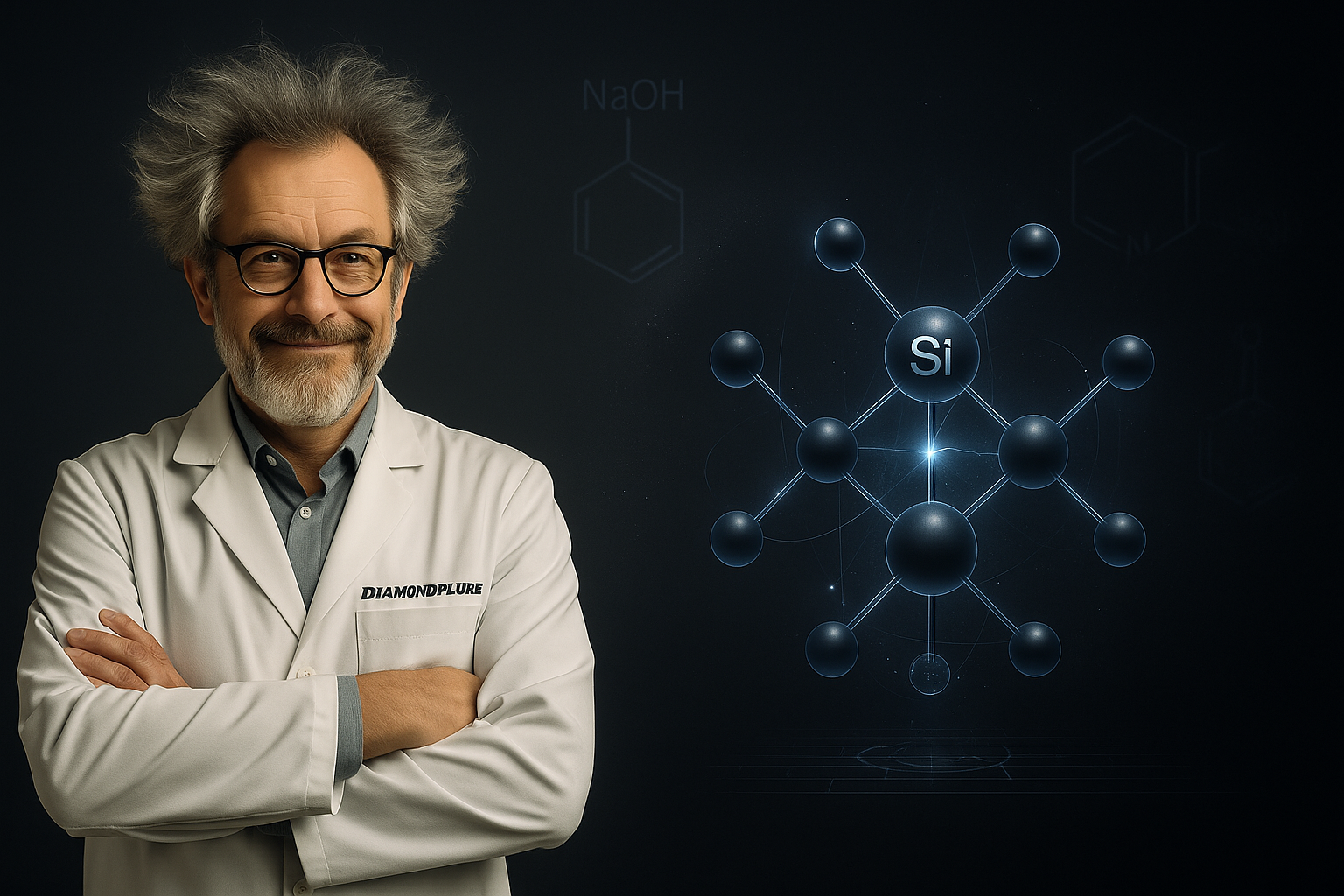
The APR nanoactivator covalently binds SiO₂ and ceramic particles, as well as graphene-based additives, to the surface.
The result is a fused hybrid structure that is part of the material itself – not just a layer applied on top.

Why Diamondplure's APR is exceptional
Conventional coatings rest on top of the surface – APR Technology™ permanently changes the surface structure.
Fusion is not visible to the eye, but its effect is visible in every application.
Advantages of APR:
- Extreme durability: One treatment = long-lasting protection without thick layers.
- Instant activation: Fusion occurs immediately – no polishing, no waiting.
- Chemical resistance: Salts, acids and solvents do not break the covalent bond.
- Optical clarity: Vitreous luster without film layer.
- Natural finish: Glossy stays glossy, matte stays matte.
- Nanotechnology & graphene: The surface is strengthened by the fusion of SiO₂ ceramic and graphene – a permanent ceramic coating.
Tested in practice. (Tested in real-use conditions – Natural Weathering. Methodology aligned with ISO standards / ISO-referenced testing / Standard references)
- Mediterranean (Spain): 36 months outdoors, high UV, softened wash water → no loss of gloss, beading retained.
- Nordic (Finland): 14 months, 47,500 km, road/salt conditions → gloss maintained, hydrophobicity restored when washed. (ISO 2810, reference ASTM D523)
- Bathroom (Hard Water Exposure): 13 months of continuous indoor exposure to iron-rich, highly staining water in the splash zone → no soap residue and microfilm adhesion was observed on the protected surfaces. Hydrophobicity and dirt-repellent properties were maintained throughout the protected area. Minor iron and mineral residue accumulation was limited to the lowest joint lines, indicating a breathable surface behavior of the structure allowing vapor and moisture transfer without affecting the visual or functional performance of the tile surfaces. (Standard references: ISO 7783, ISO 2812-4, ISO 11998, ISO 4628)

It's not about coating - It's about fusion at the molecular level.
When you touch the surface, you feel the frictionless, smooth, glassy texture and see the optical depth. This is not a traditional coating – the surface has not been given a film, but has become a protector itself.
Fusion persistence
The APR bond is permanent, but visible properties – such as the water-repellent effect and gloss intensity – require maintenance.
nanowash™ maintenance wash
Regular washing not only cleans, but also activates the remaining bonding points and restores the hydrophobic effect over and over again, keeping the surface smooth and shiny for months and even years.
In practice :
- The hydrophobic “lotus effect” is restored with every wash.
- Shine and brightness last for 12–36 months with a single treatment – even longer if maintained.